
A single rule never covers this catalogue
Sizing questions here arrive in the same shape: what size should I order? It comes down to the style, since That’s A Awful Lot Of Cough Syrup publishes its fit guidance product by product, not once for the that’s awful lot of cough syrup range. The note on the page for most pieces is true to size. Two tee styles run small enough that the brand tells you to move one or two sizes bigger. True to size describes two more as well, though each one asks you to size up for the oversized look. There is no folding those instructions into one rule, and applying one anyway is how returns happen.
The absent size chart, and what that means for you
There is no global size chart, and the brand publishes none. The brand’s own sizing pages, a general sizing chart and a separate t-shirt size chart, render without any chart content as of September 2026. Rather than a temporary outage, that is the state of the site. Any measurement table for alocs clothing on a resale listing, a blog or a lookalike store is somebody else’s reconstruction, not a published figure. That means the product description is your only authoritative source on fit, and a full read is worth the minute. Guesses is what those charts are, so read them accordingly.
The size range on offer
Take the range first, and what is actually on offer. The apparel ladder runs XS to 3XL, with small through extra-large on nearly every style. A 3XL buyer shops a subset of the catalogue, because 3XL appears on 48 products and the top is narrower than it looks. Away from that ladder sit denim and workwear, sized by waist from 28 through 44. For kids, sizes run 2/3, 4/5, 6 and 8. Every instruction quoted below comes from the brand’s own copy, and the sections are arranged by situation.
When the style is true to size
Given as fitting true to size: the Classic Cough Syrup T-Shirt, Hoodie and Sweatpants, the Dickies Button Down, the Dodger T-shirt, the Double Cup Cargo Shorts, the Women’s Booty Shorts, and the King Of The Kill, Drankenstein and Juicebusters tees. The simplest case is also the default across most of the catalogue. Whatever size you normally wear is the one to order for all of these. True to size already buys you a roomier body than a fitted tee, since the classic tees are described as relaxed-fit. A relaxed medium, not a slim one, is what your normal medium buys you in a classic awful lot of cough syrup shirt. Extra room puts you in the next situation.
When the product page says to size up for an oversized fit
Simple to misread: two styles carry a note that does two things at once. The Warning T-Shirt is published as true to size, with the added line that for an oversized fit you should consider sizing up. Worded slightly differently, the Double Cup Cargo Shorts run true to size, and for an oversized fit you size up one. What the brand is doing is explaining how to reach a looser silhouette; the garment is not mis-sized. What the instruction gives you is a condition, not a correction. Order your normal size for the intended fit; if you want it big, go one up and stop, because the note says one.
When a style runs small
The price of skipping the product copy is at its highest here. An explicit warning is published on the Wok Is Dead T-Shirt and the Promethazine Tour T-Shirt: the style runs small, so order one or two sizes bigger than your regular size for a relaxed fit. Wide-fit and cropped, both are made in lightweight cotton jersey, rinsed for a vintage feel, with water-based prints front and back, unlike the heavyweight classic tee. The extra size buys length as much as width, since a cropped body is short by design. Should you normally wear a medium, that points you at a large or extra-large here. As an illustration of why one rule cannot cover thats an awful lot of cough syrup as a catalogue, this is the clearest.
When flat measurements exist on the page
Every rule of thumb is beaten by the actual flat measurements that a few products carry. For the Wok Is Dead and Promethazine Tour tees the brand publishes width by length from the back: small 20 inches by 17.5, medium 21.5 by 19, large 23 by 20.5. Waist and inseam are given for the Double Cup Cargo Shorts: small 29.5 inches and 7.75, medium 31.5 and 8, large 33.5 and 8.5, extra-large 35.5 and 9, 2XL 37.5 and 9.5. To use them, lay flat a garment you own and like, measure armpit to armpit and collar seam to hem, then compare. That comparison beats what any letter can tell you, and it assumes nothing. Wherever measurements are published, use them and disregard everything else.
When bottoms are what you are buying
There is a second logic for bottoms, and it catches people out. The Classic Cough Syrup Sweatpants are published as fitting true to size, and sweatpants and sweat shorts sit on the XS to 3XL ladder. Because denim and workwear go by waist from 28 through 44, there is no letter to convert. That covers the cargo shorts, the carpenter pants and the Dickies-based trousers. Nothing published converts between them, and the two systems do not map onto each other. Rather than guessing, measure trousers you already wear when you are shopping alocs shorts and the listing offers a waist number.
When the product page says nothing at all
Where no fit note is published, and that is plenty of listings, judgement comes in. Wherever the brand does publish a note, the default is true to size, which makes it the safest assumption. Beyond that, let the garment type guide you: a 16 oz hoodie and a 6.5 oz tee behave very differently, and heavier cloth is less forgiving. Because a lightweight cropped tee running small says nothing about a fleece sweatpant, no rule should be imported from one style onto another. Your usual size is the reasonable default for an awful lot of cough syrup hoodie with no note, and one up if you want it oversized. If the piece matters and the page is silent, choose one that does publish a note.
What to order, taken style by style
The table gathers every published fit instruction in one place. What the brand says on the product page fills the middle column, and the right column turns it into a decision. Resale listings and reviews are not the source of any of it, and nothing has been averaged into a general rule. Where a style does not appear, no note has been published and the true-to-size default applies. Use it alongside the product page rather than a replacement, since products come and go every few weeks. All of it was checked in September 2026.
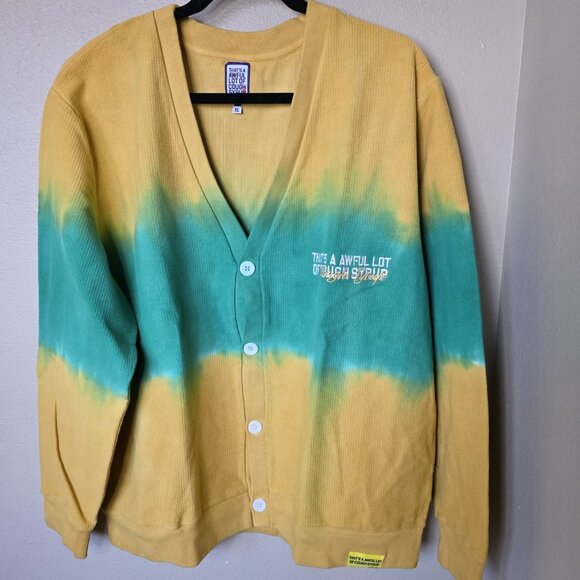
| Style | What the brand says about fit | What to order |
|---|---|---|
| Classic Cough Syrup T-Shirt | Fits true to size; relaxed fit | Your usual size |
| Classic Cough Syrup Hoodie | Runs true to size | Your usual size |
| Classic Cough Syrup Sweatpants | Fits true to size | Your usual size |
| King Of The Kill, Drankenstein, Juicebusters tees | Style fits true to size | Your usual size |
| Dickies Button Down, Dodger T-shirt, Women’s Booty Shorts | True to size | Your usual size |
| Warning T-Shirt | Runs true to size; for oversized fit, consider sizing up | Usual size, or one up for oversized |
| Double Cup Cargo Shorts | Runs true to size; for oversized fit, size up one | Usual waist, or one up for oversized |
| Wok Is Dead T-Shirt | Runs small; order 1-2 sizes bigger than your regular size | One or two sizes up |
| Promethazine Tour T-Shirt | Runs small; order 1-2 sizes bigger than your regular size | One or two sizes up |
| Any style with no published note | Nothing published | Usual size; one up for oversized |
One last word on charts you find elsewhere
The point most likely to save you a parcel bears repeating: there is no published size chart for this brand. Whoever made the charts circulating under the brand’s name did it by measuring one garment or copying a template, and neither accounts for a catalogue where one tee runs small and another runs relaxed. The pages that would hold one load without any chart, and no gap is filled by the frequently asked questions. With a refund window of a month from purchase and return shipping paid by the customer, returns exist, so a wrong call is recoverable but not free. Three things are reliable: the per-product fit note, the published flat measurements where they exist, and a tape measure against something you own. It is cheaper to read the copy properly than to post a box back.